Bhastrika Pranayama – Meaning, Scriptural References, Benefits
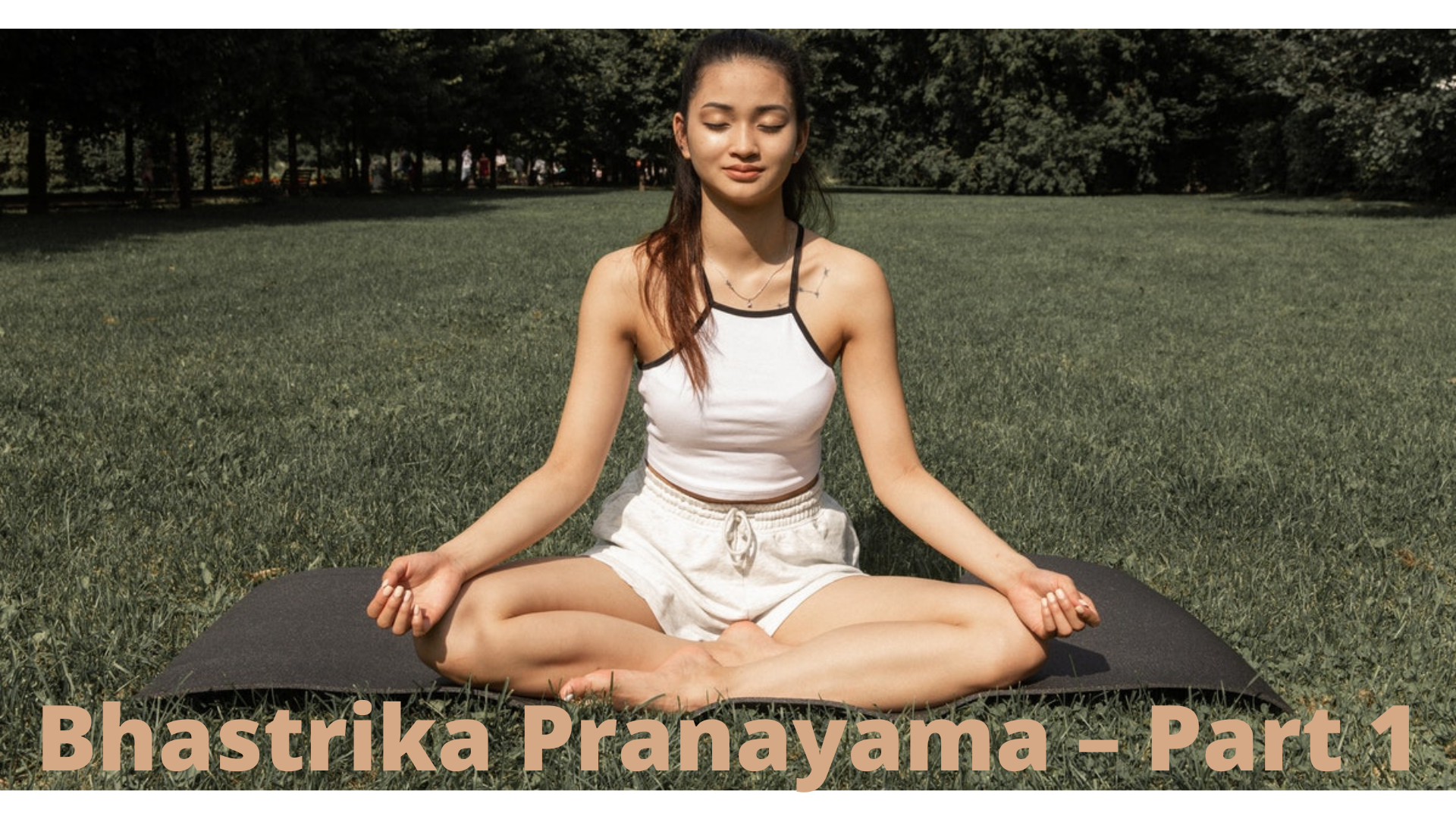
In Sanskrit, the word Bhastrika means “bellows” (to emit a loud deep sound). Therefore, bhastrika pranayama is also called “bellows breath” as air is drawn forcefully in and out of the lungs making this deep loud sound.
A blacksmith used a device called bellows to blow air into the furnace to increase the fire and temperature inside. Similarly, bhastrika pranayama increases the flow of air coming into the body and this produces more inner heat at both physical and subtle levels. Thus, increasing the inner fire of the mind and the body.
Mention in Scripture
The verses 59-67 in Hatha Pradipika are about Bhastrika Pranayama. Svātmārāma has lots of praises to give about this practice. He mentions the style of practicing Bhastrika step by step, but his style is one variation of the many ways in which Bhastrika is performed in the modern world.

Translation: "The Padma Âsana consists in crossing the feet and placing them on both the thighs; it is the destroyer of all sins. "

Translation: "Binding the PadmaÂsana and keeping the body straight, closing the mouth carefully, let the air be expelled through the nose."

Translation: "It should be filled up to the lotus of the heart, by drawing it in with force, making noise and touching the throat, the chest and the head."

Translation: "It should be expelled again and filled again and again as before, just as a pair of bellows of the blacksmith is worked."

Translation: "In the same way, the air of the body should be moved intelligently, filling it through Sûrya [right-nostril] when fatigue is experienced."

Translation: "The air should be drawn in through the right nostril by pressing the thumb against the left side of the nose, so as to close the left nostril; and when filled to the full, it should be closed with the fourth finger (the one next to the little finger) and kept confined."

Translation: "Having confined it properly, it should be expelled through the Idâ (left nostril). This destroys Vâta, pitta (bile) and phlegm and increases the digestive power (the gastric fire)."

Translation: "It quickly awakens the Kundalinî, purifies the system, gives pleasure, and is beneficial. It destroys phlegm and the impurities accumulated at the entrance of the Brahma Nâdî."

Translation: "This Bhastrikâ should be performed plentifully, for it breaks the three knots: Brahma granthi (in the chest), Visnu granthi (in the throat), and Rudra granthi (between the eyebrows) of the body."
Benefits
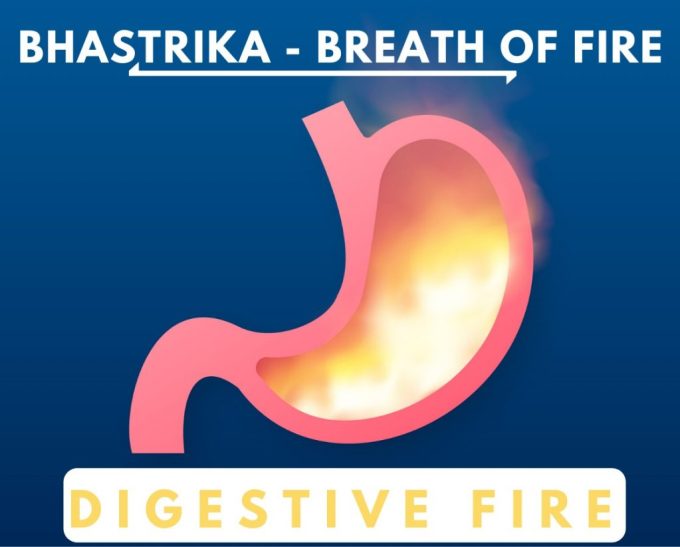
- This pranayama helps in clearing toxins and removes the doshas of kapha, pita and vata.
- There is increase in exchange of oxygen and carbon dioxide to and from the bloodstream. This helps in clearing out toxins from the blood stream.
- It increases the metabolism and produces heat. Thus, helps in fat loss.
- The fast and rhythmic movements of the diaphragm help in massaging and stimulating the organs of the digestive system. Thus, helps in strengthening them.
- It reduces the level of carbon dioxide in the lungs. Thus, it is useful for people suffering from lung problems like asthma.
- It reduces the inflammation produced in the throat.
- It helps in clearing out accumulation of phlegm and congestion.
- It strengthens and balances the nervous system.
- It helps in bringing peace and calmness to the mind.
- It helps in increasing one-pointedness of the mind and helps in preparing for meditation. Thus, before practicing meditation one can calm the mind with this pranayama.
- It helps in awakening Kundalini energy.
- It helps in clearing out blockages in the nadis.
- It helps in alleviating diabetes by increasing insulin production.
In the next post, we will learn the different types of Bhastrika Pranayama. Covering both the beginner and advanced variations of this practice.
References
- (All Translations are by Pancham Sinh) Book: Hatha Yoga Pradipika Translated by Pancham Sinh
- Book: Hatha Yoga – The report of a personal experience, by Theos Bernard
- Book: The science Of Pranayama by Sri Sivananda
- Research Paper: "Changes in Lung Function Measures Following Bhastrika Pranayama (Bellows Breath) and Running in Healthy Individuals." [link]

A sanctuary dedicated to authentic inquiry into Yoga, Tantra, Pranayama, and Vedic scriptures. Guided by classical texts and sincere spiritual seekers.
Comments & Reflections (2)
Leave a Comment
Your email address will not be published. Questions regarding spiritual practices are welcomed.
Related Articles in Guides
 Guides
Rahu Kaal Today: Complete Guide to Rahu Kaal Timings by City in India and Around the World
Rahu Kaal is one of the most commonly referenced periods in traditional Hindu timekeeping. People who follow Vedic astrology and Panchang traditions often check Rahu Kaal before beginning an important activity, especially when they want to ...
 Guides
Meditation for Kids: A Simple Guide to Help Your Child Relax and Focus
In today’s fast-paced world, kids often experience stress and anxiety, just like adults. That’s where meditation for kids comes in. Meditation is a simple and effective way to help children calm their minds, manage their emotions, and impro...
 Guides
Meditation and Its Methods: Learn Powerful Ways To Change Your Life
Did you know that regular meditation can significantly reduce stress, improve focus, and enhance overall well-being? Meditation and its methods, ancient practices rooted in various spiritual traditions, have gained widespread popularity as ...