Swami Tadatmananda on Real Kundalini Meditation
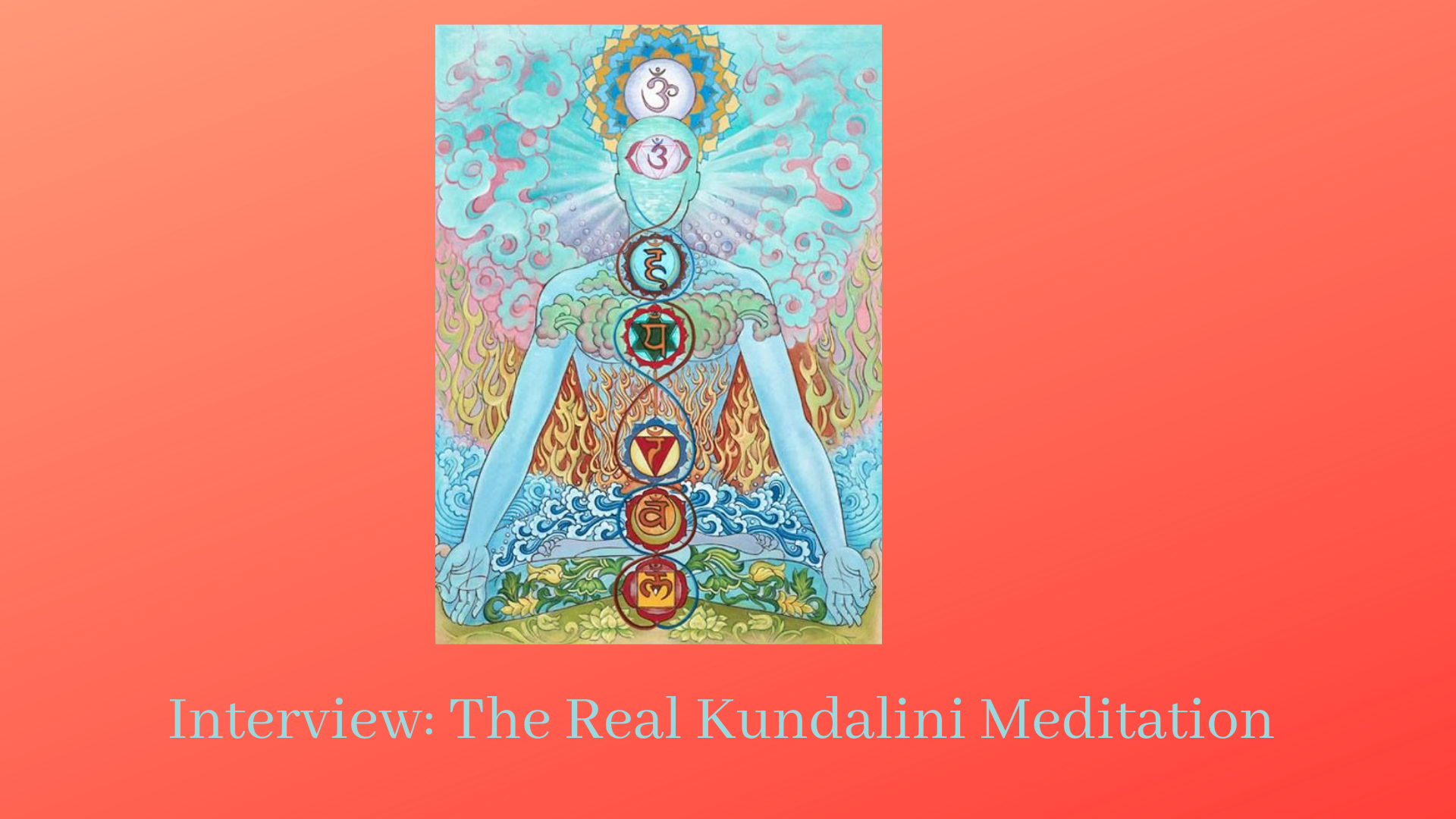
The current yoga world is populated by the buzz of Kundalini meditation. Some sing praises on this mystical serpent power located at the mooladhara chakra, waiting to be stoked to rise. Others warn about its many dangers. Either way, it is said to be essential for attaining enlightenment.
The New Age movement in the west has credited Kundalini Meditation with many psychedelic experiences. It is often shown in colorful images, with the mighty snake rising through the spine and piercing the crown chakra (sahasrāra chakra). After this piercing the consciousness is shown to explode into the colors of the rainbow. A person is supposedly said to be enlightened now
He then takes up the practice to awaken his kundalini according to the Yoga Upanishads (the most accurate method if going by the ancient scriptures). The results may shock you.
Also, many mystical experiences and psychic powers are credited to take place after the Kundalini Awakening. Many accounts compare this experience to a strong dose of LSD or a DMT trip.
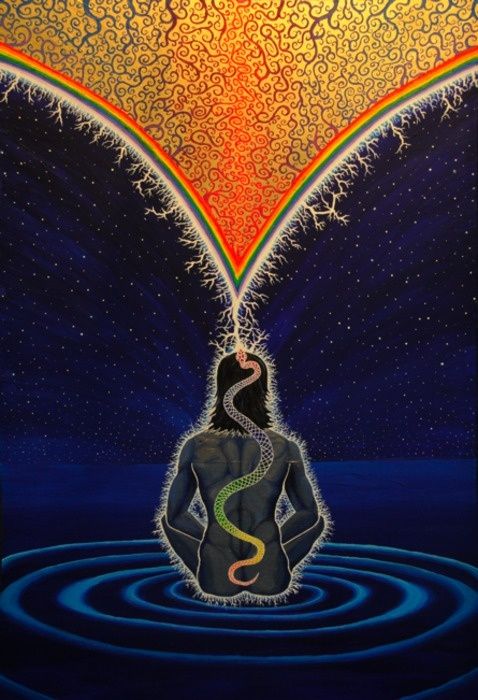
However, there are also many warnings that come with Kundalini awakening. We are often warned by many Gurus and Disciples that this experience can be too strong for the body to endure if done incorrectly. Even such a thing as spontaneous kundalini awakening is mentioned and its many horrors like mental instability and psychotic breakdowns warned about. So curious as we are in Spiritual Curiosity about all things and phenomena mystical, we decided to get to the truth about kundalini meditation and search for an expert, reputable scholar, and practitioner's opinion on this subject.
We present to you the curated video of Swami Tadmananda explaining in detail and with scholarly and scriptural references the meaning of kundalini yoga as envisioned by the ancient yogis.
He then takes up the practice to awaken his kundalini according to the Yoga Upanishads (the most accurate method if going by the ancient scriptures). The results may shock you. Watch the complete video below
About the Speaker
Swami Tadatmananda is the founder and resident teacher of Arsha Bodha Center. From 1981 onwards, he studied in the U.S. and India under Swami Dayananda.
"Swami Tadatmananda is a scholar of Sanskrit and former computer engineer. His background allows him to draw upon contemporary scientific and psychological insights while unfolding sacred Sanskrit scriptures. He thus endows the spiritual teachings of ancient India with great relevance and clarity. He has authored several books and CDs including “Roar of the Ganges” and “Meditation: A Journey of Discovery.” [link]
Excerpts from the Interview
The other reason I've avoided teaching kundalini yoga is that I'm completely turned off by the way it's been distorted and misrepresented by contemporary Western yogis. I'm tired of seeing dazzling, rainbow hued chakras and bodies emitting fountains of light from every pore.
Images like these portray a practice that has virtually nothing in common with its ancient origins.
Yet, people seem drawn to glitzy illustrations and trendy new-age beliefs.
To awaken kundalini shakti, the yoga upanishads prescribe a variety of asanas, pranayamas, and muscle contractions known as bandhas. It's interesting that a method known as shaktipaat is not discussed anywhere in the upanishads. Shaktipaat is a special blessing from a guru - like a mantra, or even a mere touch or glance - that is said to immediately awaken your kundalini. The use of shaktipaat is widely accepted by modern teachers, even though the rishis never mentioned it.
I allowed that sensation to grow stronger, and then shifted my attention upwards, towards the top of my head. As before, the sense of warmth moved upwards, but while rising, it changed into a brilliant light that seemed to fill my head and body, and radiate beyond as well. Then, almost immediately, that light faded and my mind became profoundly silent.
References
- Website: Arsha Bodha Center - Swami Tadatmananda, Youtube Channel
A sanctuary dedicated to authentic inquiry into Yoga, Tantra, Pranayama, and Vedic scriptures. Guided by classical texts and sincere spiritual seekers.
Comments & Reflections (1)
Leave a Comment
Your email address will not be published. Questions regarding spiritual practices are welcomed.
Related Articles in Interviews
 Interviews
James Hillman on changing our objects of desire in order to save ourselves
The objects of our desires, from a very early age, are promised to be material possessions. The cure for our internal longings, and in a sense desire to be fulfilled is continuously catered by the advertisers to be just around the corner. A...
 Interviews
Jiddu Krishnamurti on what is spiritual enlightenment
In the following Interview, J Krishnamurti uses his sharp wit to give his opinion on what is spiritual enlightenment. Questioner: All so-called religious people have something in common and I see this same thing in most of the people who co...
 Interviews
Tantra Yoga Explained In The Easiest Way
What exactly is Tantra Yoga ? What is its history, tradition and practices? What connection does it have with Yoga, Buddhism, and other World Religions? In this interview, Dr. Thomas Daffern explains Tantra Yoga from its very beginnings in ...