Ashwini Mudra Sexual Energy Sublimation – Technique, Benefits, Precautions

Ashwini mudra belongs to a class of mudras that are used for sexual energy sublimation. These mudras are called Adhara or perineal mudras. They redirect the prana from the lower centers (Mooldhara chakra) of the body to the higher centers (Ajna chakra).
Mudras included in the Adhara group are:
- Vajroli/Sahajoli mudra
- Ashwini Mudra
Definition in Scriptures

Translation
“Gently contract the anus by means of Ashvinimudra until air is forced to enter the Sushumna and manifest its presence” [1].

Translation
“Contract and dilate the anus over and over again. This is Ashvinimudra. It awakens Shakti” [1].
Technique
Ashwini mudra can be performed in two ways. The two variations are given below. It is better to perform this on an empty stomach or 2 to 3 hours after a meal.
First Method (Rapid Contraction)
- You can sit in a comfortable meditation asana. It is vital that you sit in a pose where your spine is straight and not drooping or reclining. Wrong posture might cause imbalance in energies and lead to unwarranted side-effects from the practice. The preferred posture is siddhasana or siddha yoni asana.
- Close your eyes and try to relax the whole body.
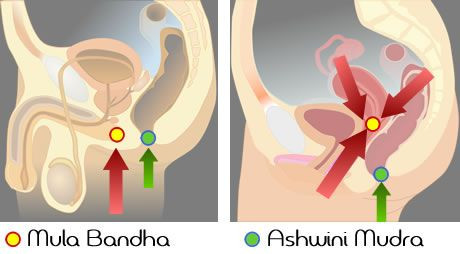
- Bring your awareness to your breath for a few minutes. Then shift your awareness to your anus. Contract the sphincter muscles of your anus for a few seconds without straining them, and then relax them for a few seconds. Make sure that your contraction is confided to the anal region.
- Repeat the above step (contraction and relaxation) for as long as possible.
- In the beginning of your practice, the contraction and expansion should be smooth and rhythmic.
- As you progress in the practice (few weeks), you can make the contractions rapid.
Second Method (Contraction with internal breath retention)
- First step is the same like in the first method. Sit in any comfortable meditation asana. Close the eyes and relax the whole body.
- Inhale deeply and slowly; simultaneously contract the sphincter muscles of your anus.
- While in contraction, practice antar kumbhaka (internal breath retention). Make sure that you don’t strain yourself and hold the breath and the contraction as long as you feel comfortable.
- Exhale and release the contraction of the anus. This makes one round. Perform as many rounds as you feel comfortable in the beginning.
Duration
Beginners should be careful not to strain their muscles. Only slowly increase the rounds when the anal muscle becomes strong. Start with only 5 to 10 rounds in the beginning.
Note
To practice moola bandha, one first needs to master the Ashwini mudra.
Benefits (According to Yoga)
- Sexual energy sublimation. It helps in moving the vital energy from the lower body centers towards the brain.
- It helps to strengthen the anal muscle and cure many ailments associated with the anal region like:
- Constipation
- Piles
- In case of prolapse of the uterus this mudra is beneficial and is performed in conjunction with an inverted asana like sarvangasana.(Medical advice by a doctor and a trained yoga teacher is important.)
Precautions
- People with anal fistula should avoid this practice.
- Excessive heat might be produced during this practice. Therefore, avoid it during summers and do it for less rounds in the beginning.
- People with high blood pressure or abdominal surgery should avoid this.
- People with glaucoma should avoid this.
- During pregnancy avoid this mudra completly.
- Don’t exert excessive force or strain yourself while practicing. Always remain calm and relaxed and listen to your body. If you are facing headaches or body pains after the practice that are severe, stop the practice immediately and seek an expert’s guidance.
- Always begin any Yoga practice for the minimum length of duration and least rounds.
References
- Book: The Gheranda Samhita: The Original Sanskrit and an English Translation, edited by James Malinson
- Book: Asana Pranayama Mudra Bandha by Swami Satyananda Saraswati
- Book: Hatha Yoga Pradipika by Yogi Swatmarama (author), Brian Akers (translator)

A sanctuary dedicated to authentic inquiry into Yoga, Tantra, Pranayama, and Vedic scriptures. Guided by classical texts and sincere spiritual seekers.
Comments & Reflections (1)
Leave a Comment
Your email address will not be published. Questions regarding spiritual practices are welcomed.
Related Articles in Guides
 Guides
Rahu Kaal Today: Complete Guide to Rahu Kaal Timings by City in India and Around the World
Rahu Kaal is one of the most commonly referenced periods in traditional Hindu timekeeping. People who follow Vedic astrology and Panchang traditions often check Rahu Kaal before beginning an important activity, especially when they want to ...
 Guides
Meditation for Kids: A Simple Guide to Help Your Child Relax and Focus
In today’s fast-paced world, kids often experience stress and anxiety, just like adults. That’s where meditation for kids comes in. Meditation is a simple and effective way to help children calm their minds, manage their emotions, and impro...
 Guides
Meditation and Its Methods: Learn Powerful Ways To Change Your Life
Did you know that regular meditation can significantly reduce stress, improve focus, and enhance overall well-being? Meditation and its methods, ancient practices rooted in various spiritual traditions, have gained widespread popularity as ...