Matsyendranath & Nath Sampradaya: Founders of Hatha Yoga & First Mahasiddhas
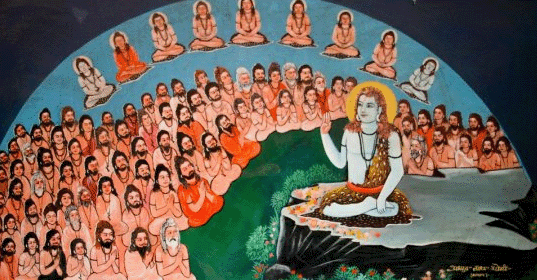
Matsyendra also known as Mastsyendranath or Minapa, is believed to live in the early 10th century. He was a prominent promoter of Hatha Yoga (a major branch of yoga) and is credited as the guru of Gorakhnath who was the founder of the Nath Sampradaya (sect) of Yogis. Gorakhnath later became the teacher of Swatmarama, the writer of Hatha Yoga Pradipika. Matsyendranath was also a saint and a mahasiddha yoga. We will talk more about what mahasiddha means later on in the article. First, let’s understand the scriptural reference of Matseyndranath and the Nath Sampradaya.
Matsyendranath in Hatha Yoga Pradipika

Translation 1: Yogi Matsyendranath knew the knowledge of hatha yoga. He gave it to Gorakhnath and others, and by their grace the author (Swatmarama) learned it [1].
Translation 2: “Matsyendra, Goraksha, and others know well the science of Hatha. By their grace, Yogi Svatmarama also knows it [2].
In the above verse, Swatmarama shows the lineage of the masters or Siddhas of hatha yoga. Matsyendranath is shown as the first guru that began the lineage of Hatha yogis.
Matseyndranath and the Nath Sampradaya
It is considered that both Matseyndra and Gorakhnath belonged to a popular yoga sect called Nath Panthis. Nath is a term generally used to denote a ‘master.’
Members of Natha Panthis are also called kanphata yogis. Here, kanphata means ‘split-eared.’ This is a reference to the unique practice of yogis of this sect to have the cartilage of their ears pierced for huge earrings.
The origin of Nath sampradaya is believed to be around the middle of the 7th century, at the time when the influence and dominance of tantra shastras were spread all over India. Unfortunately, this was also the time when yoga was associated with bad superstitions of black magic and sorcery.
It is believed that the Nath sampradaya came into existence in order to improve the image surrounding spiritual practices which at that time were becoming more and more esoteric, outlandish, fringe, and controversial/unorthodox [1].
Yogis of Nath sampradaya are highly respected and revered because of their ability to perform severe penance, their lifestyle of austerity, and their accomplishments of siddhis (perfection of mind).
They are influential and prominent all over India, but particularly more around Gorakhpur (Uttar Pradesh).
Legends around formation of Nath Sampradaya
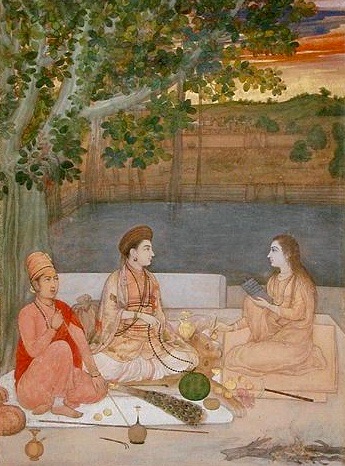
There are many legends that elucidate how the Nath sampradaya was formed. A few of them are given below:
Legend 1:
The first legend goes that to prevent the corruption of spirituality, Vishnu and Mahesh came to earth as the incarnations of Gorankhnath and Matsyendranath to spread the message of yoga.
Legend 2:
There is another prominent and very important legend surrounding Yoga and the lineage of Naths. It is believed that a yogi called Adinath, was the first head of the Naths, even preceding Matsyendranath. This Adinath is identified as none other than the great Lord Shiva.
Thus, it is attributed that Lord Shiva or God is the creator of Yoga.
According to an account in the Puranas, Lord Shiva was telling Lord Parvati about the secret sadhanas (practices) of yoga while standing near a seashore. A large fish is supposed to have overheard all the important secrets from Shiva. This fish was carrying inside its belly a discarded baby called Matsyendranath. Upon overhearing the secrets of yoga this baby began to practice yoga and after 12 years emerged from the fish's belly as an enlightened Siddha (one who has perfected the practice). This account is given as the origin of Matsyendranath’s name, which also means 'Lord of the Fishes' or 'He Whose Lord is the Lord of the Fishes' [3].
Gorakhnath a Mahasiddha
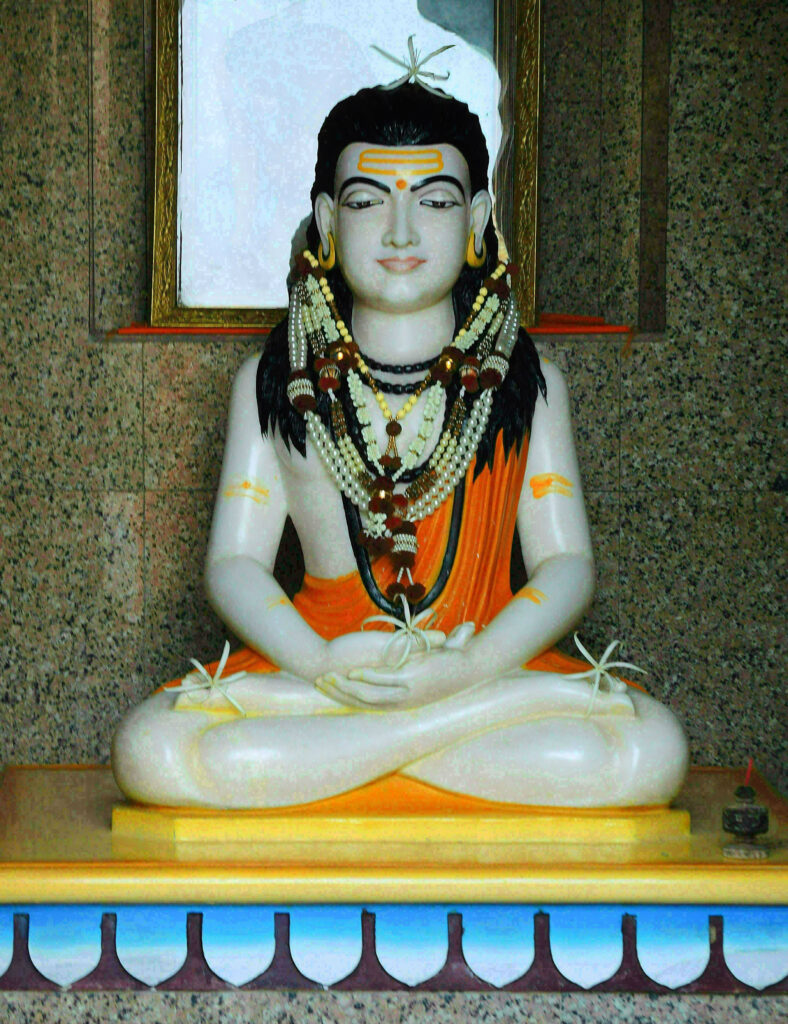
Gorakhnath was a highly revered disciple of Matsyendranath who went to become a great teacher and the founder of Nath sampradaya. He is considered by many to be a mahasiddha.
Mahasiddhas are yogis who are considered to have attained powers through the perfection of their yoga practice or sadhana.
To clarify some of the basic terms of yoga (link: for a comprehensive list):
- Sadhna: To practice
- Sadhka: Practitioners
- Sadhya: Object of practice
- Siddhi: When the practice is perfected by sadhka, the results obtained are called as siddhis
Siddhis may mean psychic powers but according to raja yoga, they also mean perfection of mind and body. Such that the practitioner has total control over his body and mind through years or maturity of practice.
Mahasiddhas according to Scripture
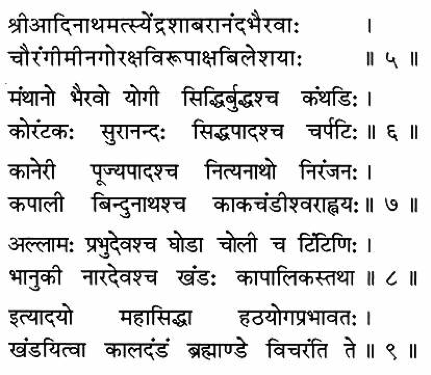
According to Hatha Yoga Pradipika, the following are the yogis considered to be mahasiddhas:
- Shiva
- Matsyendra
- Shabara
- Anandabhairava
- Chaurangi
- Mina
- Goraksha
- Virupaksha
- Bileshaya
- Manthana
- Bhairava
- Siddhi
- Buddha,
- Kanthadi
- Korantaka
- Surananda
- Siddhapada
- Charpati
- Kaneri
- Pujyapada
- Nityanatha
- Niranjana
- Kapali
- Bindunatha
- Kakachandishvara
- Allama Prabhudeva
- Ghodacholi
- Tintini
- Bhanuki
- Naradeva
- Khanda
- and Kapalika
These are the great yogis considered to have conquered death.
References
- Book: Hatha Yoga Pradipika: Light On Hatha Yoga, commentary by Swami Mukti Bodhananda
- Book: The Hatha Yoga Pradipika (Translated), Svatmarama (Author), Brian Dana Akers (Translator)
- Book: The Yoga Tradition: Its History, Literature, Philosophy and Practice by Georg Feuerstein
- Research Paper: Matsyendra - Lorin Roche, Ph.D.
- "Saktism and Hatha yoga" by James Mallinson

A sanctuary dedicated to authentic inquiry into Yoga, Tantra, Pranayama, and Vedic scriptures. Guided by classical texts and sincere spiritual seekers.
Comments & Reflections (5)
Leave a Comment
Your email address will not be published. Questions regarding spiritual practices are welcomed.
Related Articles in Articles
 Articles
The Scientific Benefits of No Fap: Unlocking the Power of Mind and Body
The practice of No Fap —abstaining from physical release—is now believed to offer significant scientific benefits . Through research in Quantum Neuropsychology , scientists suggest that No Fap activates a hidden structure in the brain calle...
 Articles
Carl Jung on Kundalini: Unlocking the Mysteries of the Unconscious Mind
Carl Jung explored the powerful concept of Kundalini, believing it held the key to unlocking the human mind's deepest layers. He saw Kundalini as a “cosmic filament,” an energy that connects each person’s mind to what he called the Prime Co...
 Articles
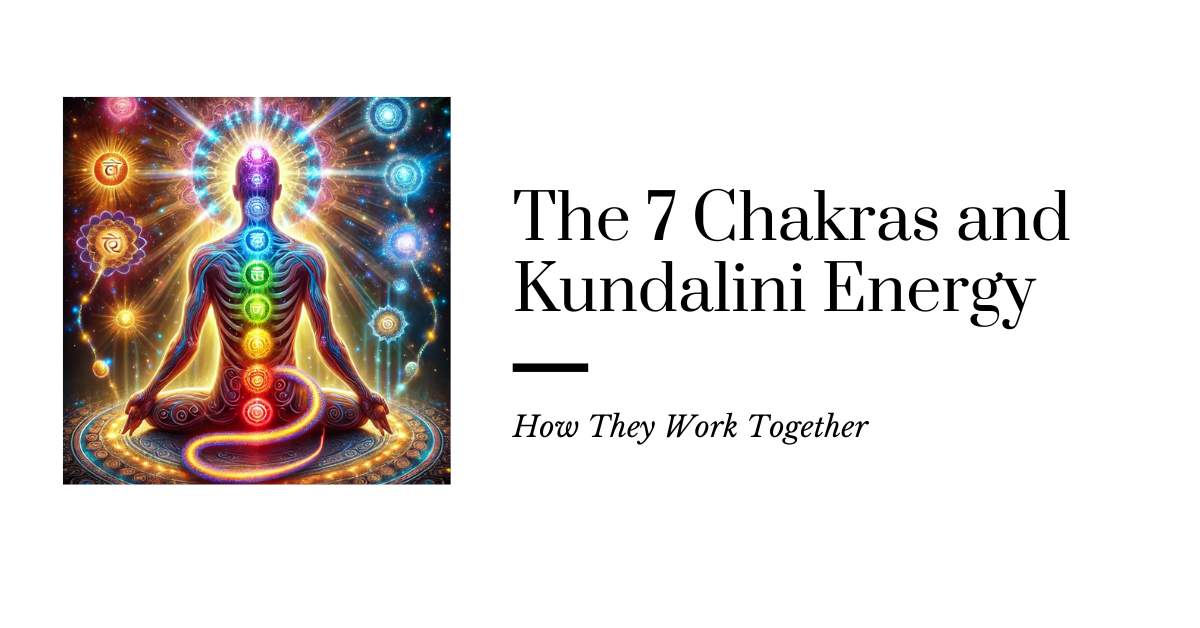
The 7 Chakras and Kundalini Energy: How They Work Together
The human body is not just a physical vessel; it is also an energetic one, composed of intricate systems of spiritual and emotional energies. One of the most powerful spiritual concepts in ancient Indian traditions is Kundalini energy , bel...